
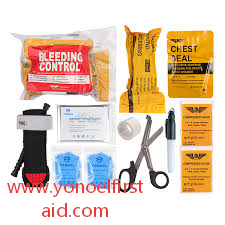
What box materials does a First Aid Box Supplier like Yonoel offer for different environments? This question determines how long a kit survives in a car trunk, a boat, or a construction site. Dongyang City Yonoel Outdoor Products Co., Ltd. operates from Jinhua City, Zhejiang Province. The factory holds BSCI verification and maintains a cleanroom for medical device assembly. A first aid box supplier must match material to use case. Yonoel produces four material families: hard plastic, soft nylon, aluminum, and metal tin. Each material serves a distinct purpose.
Hard plastic boxes form the most common category. Yonoel uses polypropylene and ABS plastics. Polypropylene resists chemical exposure. A polypropylene box holds alcohol wipes and iodine bottles without cracking. ABS plastic offers impact resistance. A dropped ABS box does not shatter. Yonoel molds these plastics into cases with hinged lids and latches. The latches use stainless steel pins. The pins prevent rust when the box sits in a humid garage. Plastic boxes also allow clear lid options. A clear lid lets a user see contents without opening. Yonoel prints a white cross on the lid for visibility. The factory tests each plastic box on a drop tower. A two-kilogram weight falls onto the closed box from one meter. Passing boxes show no hinge breakage or lid separation.
Soft nylon boxes serve portable needs. Yonoel uses 600-denier nylon fabric. This fabric resists tearing and abrasion. A nylon box folds flat when empty. A user keeps one in a glove compartment or backpack. The fabric box weighs one third of a plastic box. Yonoel adds a water-resistant coating to the nylon. The coating repels rain and spills. A zipper closure secures contents. The zipper teeth use plastic rather than metal. Plastic teeth do not corrode in saltwater environments. Yonoel reinforces the nylon box corners with PVC patches. These patches prevent wear from repeated packing and unpacking. A nylon box from Yonoel serves travel, hiking, and marine applications.
Aluminum boxes provide a premium option. Yonoel uses 0.8 millimeter thick aluminum sheet. The sheet is stamped into a two-piece case. A hinge joins the top and bottom sections. Aluminum does not rust. A first aid box on a fishing boat stays functional for years. Aluminum also resists crushing. A heavy tool case dropped onto an aluminum box will not collapse the contents. Yonoel powder coats the aluminum in red or orange. The coating includes a gloss finish for easy cleaning. A medical facility wipes the box with disinfectant daily. The powder coat does not peel. Yonoel adds a rubber seal around the lid opening. The seal makes the box dustproof and splashproof. An aluminum box with a rubber seal meets IP54 ingress protection standards.
Metal tins serve compact, single-use kits. Yonoel produces tins from tin-plated steel. The steel measures 0.3 millimeters thick. A tin box fits in a purse, a pocket, or a car door panel. Yonoel prints the contents list directly on the tin lid. A user reads the list without opening. The tin has a slip hinge. The lid slides off rather than flipping open. This hinge style uses fewer moving parts. A sliding lid works even when the box gets crushed slightly. Yonoel coats the tin interior with food-grade epoxy. The epoxy prevents rust from condensation inside the box. A tin car kit survives winter temperature swings without corrosion.
Yonoel tests each material for its intended environment. The plastic box undergoes a UV exposure test. One hundred hours of UV light simulates three years of sunlight. The plastic does not yellow or crack. The nylon box undergoes an abrasion test. A rotating brush rubs the fabric for ten thousand cycles. The coating stays intact. The aluminum box undergoes a salt spray test. Two hundred hours of salt fog create no pitting. The metal tin undergoes a compression test. A fifty-kilogram weight sits on the closed tin for one hour. The lid does not buckle.
For buyers comparing material options, https://www.yonoelfirstaid.com/ displays the full first aid kit catalog with material specifications listed for each product. A customer selects plastic for general home use, nylon for portability, aluminum for marine or industrial environments, and metal tin for pocket kits. Yonoel also accepts custom material requests. A distributor needing a foam-filled waterproof case receives a quotation within days.
The question of box materials receives four answers from Yonoel. Hard plastic suits general storage. Soft nylon suits travel and portable use. Aluminum suits harsh environments. Metal tin suits compact, single-purpose kits. Does your current first aid box supplier offer material options matched to your storage conditions, or does a single box type serve all needs poorly?

 English
 Arabic
 French
 Spanish
 Portuguese
 Deutsch
 Turkish
 Dutch
Dutch
 Italiano
 Russian
 Romaian
 Greek
Greek