
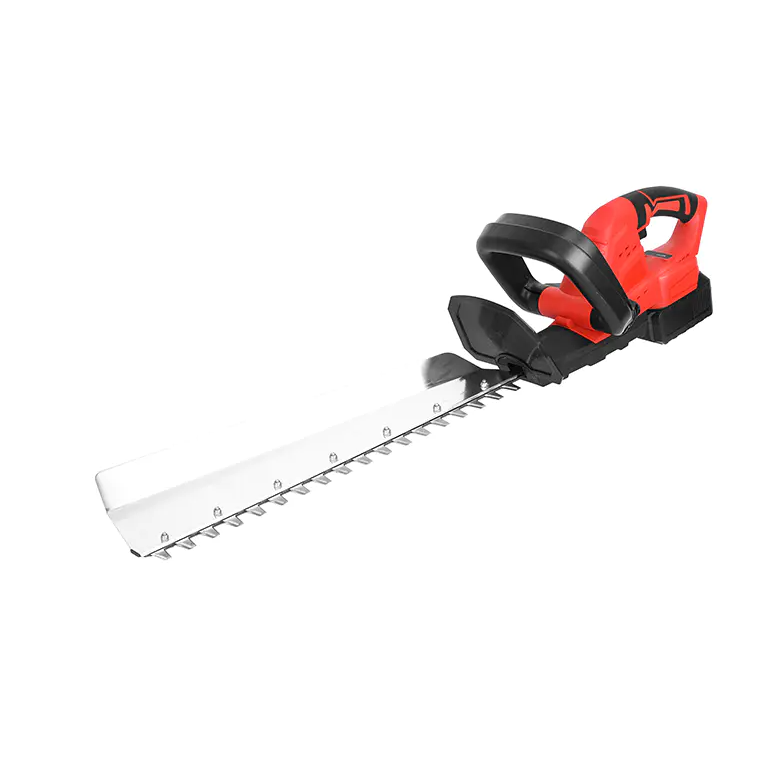
Owning a hedge machine is only half the story. Knowing how to use it well — how to move the blade, when to cut, and what shape you are actually aiming for — is what separates a respectable hedge from one that draws compliments.
Timing is the first consideration. Most hedges respond well to cutting in late spring, after the first flush of new growth has hardened slightly, and again in late summer before the season winds down. Cutting too early in spring risks damage from late frosts; cutting too late in autumn can leave freshly exposed growth vulnerable to the cold. A hedge trimmer applied at the right moment in the growing calendar does far less harm and produces far cleaner results.
When you start cutting, work from the bottom of the hedge upward. This approach lets clippings fall away from the area you have already shaped, keeping your sight lines clear. Use wide, sweeping arcs rather than short, choppy strokes — long passes let the reciprocating blade work at its natural rhythm, producing a smoother surface. The hedge trimmer does not need to be forced; the blade does the work when you let it move at the pace it was designed for.
Keeping the top of a hedge level is one of the more common challenges. A garden line or string stretched taut between two stakes at the desired height gives you a reliable visual guide. Some gardeners use a spirit level on a long board laid across the hedge as a reference. Either way, having an external guide prevents the gradual drift that makes a hedge appear to slope when you step back and look at it from the street.
When using a Hedge Machine for formal shapes — spheres, cones, or flat-topped geometric forms — work slowly and check your progress frequently. Walk back from the hedge every few minutes and assess the outline from a distance. A Hedge Machine can remove more material than expected in a short time, so gradual trimming helps maintain cleaner symmetry. Small corrections made early are manageable, while heavy trimming later may create thin or bare sections that need an entire growing season to recover.

 English
 French
 Spanish
 Portuguese
 Deutsch
 Turkish
 Dutch
Dutch
 Italiano
 Russian
 Romaian
 Portuguese (Brazil)
 Greek
Greek