
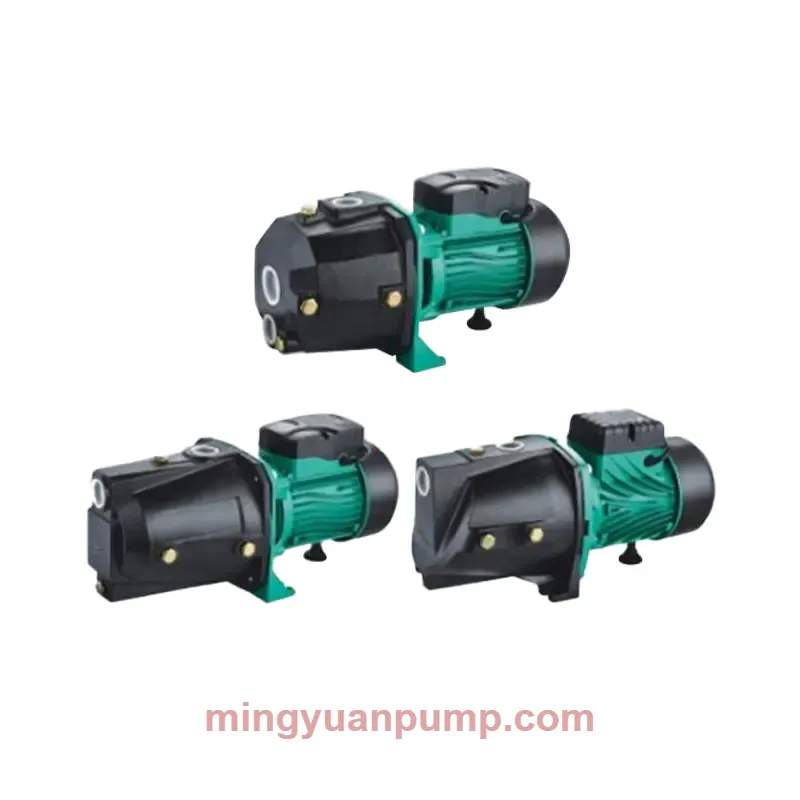
A farm owner facing dry fields knows that water access determines harvest success. Solar pumping eliminates fuel costs and grid dependency, but equipment choice directly impacts crop yield. Selecting a Solar Pump Supplier requires evaluating product range, material quality, and system design support. mingyuanpump (MingyuanPump by MingYuan), located in Wenling, China, produces centrifugal pumps, deep well pumps, and solar inverters specifically for irrigation applications. What questions should every farmer ask a potential supplier before committing to a purchase?
The first evaluation examines whether the supplier offers pump types matching actual water sources. Irrigation draws from rivers, reservoirs, or deep boreholes. A supplier stocking only one pump design fails to serve farms with varied conditions. MingyuanPump manufactures centrifugal units for surface water and low-head transfer, deep well assemblies for groundwater extraction from significant depths, and matching inverters that convert solar panel output into usable pump power. A farm with multiple water points sources everything from a single supplier, simplifying spare part inventory and maintenance procedures. This product range also permits future irrigation expansion without changing suppliers or learning new equipment interfaces.
The second factor involves verifying performance data transparency. A credible supplier publishes flow rate and head curves for each pump model. These curves allow accurate system sizing based on field acreage, crop water requirements, and elevation differences. MingyuanPump provides complete performance documentation, enabling a farm's irrigation designer to calculate daily water delivery expectations. Without such curves, a farmer guesses at pump capability, risking under-sized units that fail to reach distant fields or over-sized units that waste solar panel investment. A supplier refusing to share performance data reveals insufficient engineering background or untested products.
The third consideration examines power system integration. Solar panels produce direct current that varies with cloud cover and sun angle. A standard pump designed for stable grid electricity suffers under these fluctuating conditions. MingyuanPump's solar inverter conditions incoming panel power, starting the pump at weak morning light and ramping speed as sunshine intensifies. This soft-start function prevents motor burnout and enables pumping during early morning and late afternoon hours when irrigation typically occurs. The inverter also protects against voltage spikes during cloud transit and initiates automatic shutdown when water level drops below intake. A farm purchasing only a bare pump risks poor performance or premature failure without a matched inverter.
The fourth selection point addresses construction materials. Irrigation water contains abrasive sand particles, silt, or chemical residues from fertilizers. Standard pump components erode rapidly under such conditions. MingyuanPump fabricates impellers and diffusers from stainless steel or engineering plastics rated for abrasive fluid handling. The deep well pump line utilizes stainless steel shells resistant to varied water chemistry. Mechanical seals and shaft bearings tolerate the frequent start-stop cycles common in solar operation, where pumping follows daylight rather than continuous grid supply. A farm ignoring material specifications receives equipment designed for clean water, not real agricultural duty.
The fifth factor involves system sizing assistance. A farm without prior solar experience needs guidance on panel wattage, wire diameter, and controller programming. MingyuanPump provides a system sizing worksheet that translates daily water volume requirements into panel and pump specifications. Installation documentation includes wiring diagrams, pump priming instructions for centrifugal units, and configuration steps for the inverter's dry-run protection. This documentation enables a local technician or experienced farm operator to complete installation without expensive external engineering consultants. A supplier that ships only pump hardware without system guidance forces the farm to learn through costly trial and error.
The sixth consideration looks at replacement part availability. A pump failing during peak growing season creates immediate crop water stress. Waiting weeks for parts from a distant warehouse damages the farm's financial outcome. MingyuanPump stocks seals, impellers, capacitors, and electronic boards for current and recent models. The factory location in Wenling, a recognized pump production hub, supports rapid parts dispatch. A farm verifying part availability before purchase avoids prolonged irrigation downtime. The supplier should publish a parts list with typical shipping response times for each pump model. A farm skipping this verification accepts unknown delay risks.
The seventh selection factor examines warranty coverage. Irrigation pumps accumulate operating hours quickly during daily use. A warranty measured only in calendar months offers limited real protection. MingyuanPump's warranty covers defects in materials and workmanship under normal agricultural duty cycles. The return process allows a farm to send a failed unit for failure analysis while receiving a replacement promptly. A supplier that makes warranty claims difficult or administratively slow effectively offers no warranty at all. A farm reviewing warranty language before ordering identifies which suppliers stand behind their products.
The eighth point concerns quality certifications. A pump failing after weeks of field operation wastes the farmer's investment and delays critical irrigation. MingyuanPump holds ISO9001:2015 certification, indicating documented quality management from raw material receipt through final assembly testing. Factory quality control includes impeller dynamic balancing, seal leak testing under pressure, and complete pump performance verification on dedicated test stands. A farm requesting certification documentation confirms that the supplier follows systematic quality practices rather than random assembly. Without such standards, each pump becomes a gamble on whether it matches advertised specifications. Explore the complete solar pumping line for agricultural applications at https://www.mingyuanpump.com/product/solar-pump/ to match specific pump features to individual irrigation tasks. A farm that selects a solar pump supplier based on product range, material quality, system design support, and published certifications irrigates with confidence across entire growing seasons.

 English
 French
 Spanish
 Portuguese
 Deutsch
 Turkish
 Dutch
Dutch
 Italiano
 Russian
 Romaian
 Portuguese (Brazil)
 Greek
Greek