
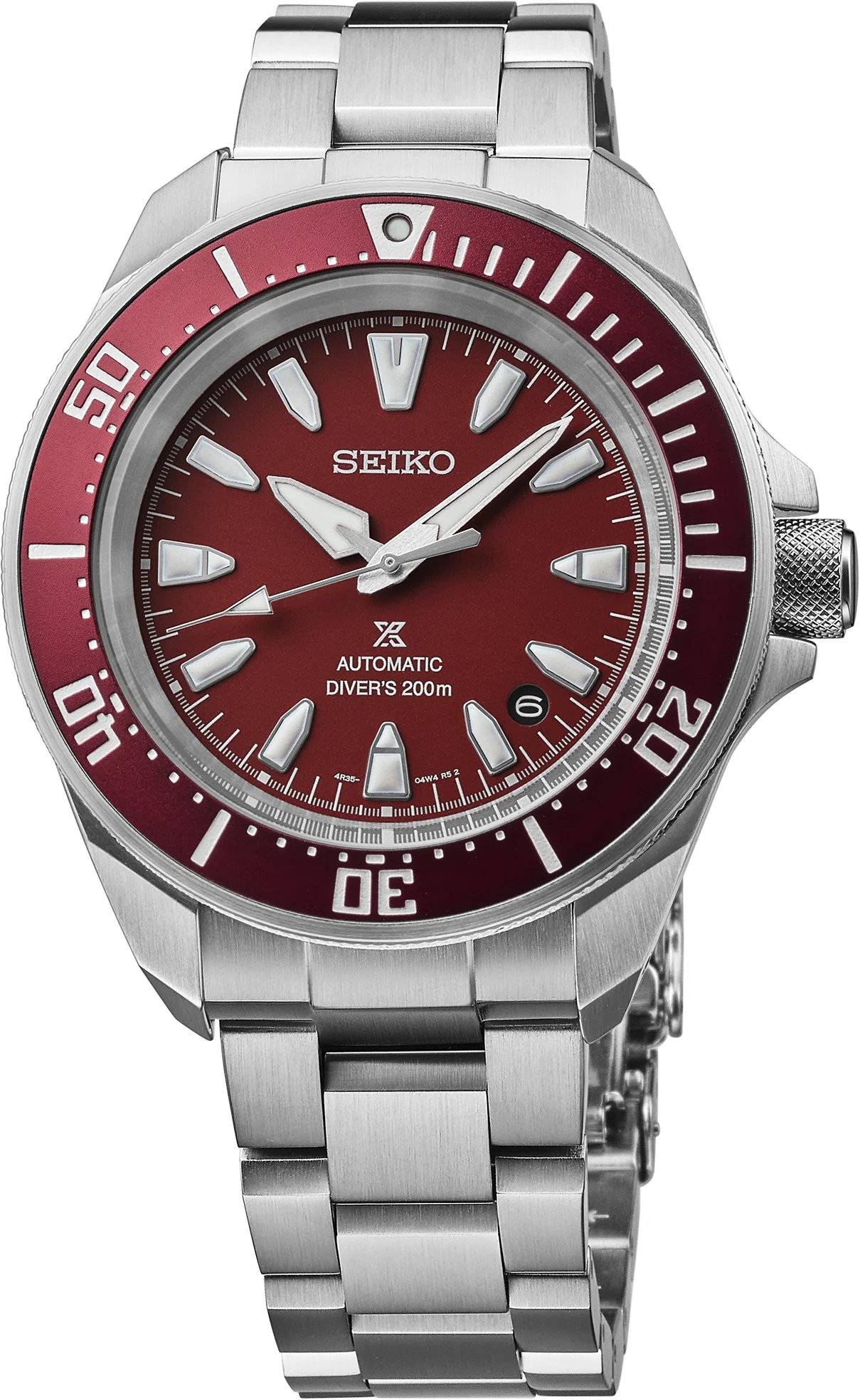
In the expansive world of horology, few manufacturers command the universal admiration, respect, and market presence of Seiko Watch. For over 140 years, the Japanese brand has served as a masterclass in versatility. It is a brand uniquely capable of producing a reliable, entry-level mechanical timepiece for a hundred dollars, while simultaneously creating elite, high-luxury art pieces that rival the very best of Swiss haute horlogerie.
Whether you are an aspiring collector looking for your first serious daily wrist companion or a seasoned connoisseur with an eye for technical innovation, Seiko represents an unparalleled marriage of heritage, manufacturing independence, and engineering excellence.
A History of Quiet Revolution
The story of Seiko began in 1881 in Tokyo, Japan, when a visionary 21-year-old entrepreneur named Kintaro Hattori opened a small shop repairing and selling clocks in Ginza. Driven by a relentless philosophy to always stay "one step ahead of the rest," Hattori transitioned from retailing to manufacturing, establishing the Seikosha factory in 1892. The word Seiko itself carries a beautiful dual meaning in Japanese: it translates to both "exquisite" and "success."
By 1913, the company produced Japan's first wrist-worn timepiece, the Laurel, laying the foundation for a legacy of total manufacturing self-sufficiency. Unlike many watch brands that act as assemblers—purchasing dials from one supplier, hands from another, and movements from third-party manufacturers—Seiko builds every crucial component in-house. From smelting its own specialized stainless steel alloys to growing synthetic quartz crystals and formulating its own proprietary lubricating oils, Seiko maintains absolute creative and quality control over its production lines.
The Day the Industry Stood Still: The Quartz Crisis
You cannot discuss the legacy of modern watches without highlighting the monumental event that occurred on December 25, 1969. On that Christmas Day, Seiko released the Quartz Astron, the world's first commercially available quartz wristwatch.
Before the Astron, timepieces relied entirely on wound springs and complex mechanical gear trains, which were inherently susceptible to gravity, shock, and temperature changes. Seiko replaced these with an integrated circuit powered by a tiny battery and regulated by a tuning-fork-shaped quartz crystal vibrating at exactly 32,768 times per second.
The Astron was accurate to within $\pm5$ seconds per month—a level of precision that made even the most expensive mechanical chronometers obsolete overnight. This innovation sparked what historians call the "Quartz Crisis" (or the Quartz Revolution), fundamentally changing how the world kept track of hours and democratizing accurate timekeeping for billions of people across the globe.
Unpacking the Diverse Product Ecosystem
Rather than attempting to force a single style onto every consumer, Seiko has masterfully segmented its modern offerings into highly specialized sub-collections, each targeting a specific lifestyle and design ethos.
1. Seiko 5 Sports (The Everyday Mechanical Gateway)
Designed for the younger generation and casual enthusiasts, the Seiko 5 Sports lineup is built around five core promises: an automatic mechanical movement, a day-date complication, significant water resistance, a recessed crown, and a highly durable case structure. It serves as the definitive introduction to the charm of mechanical watch ownership without demanding a luxury premium.
2. Prospex (Professional Specifications)
Built to withstand the absolute extremes of nature, the Prospex series is designed specifically for sports enthusiasts and professional adventurers. The collection is highly regarded for its legendary ISO-certified dive watches, featuring iconically nicknamed case shapes like the cushion-shaped "Turtle" or the heavily armored "Tuna." These are pure tool watches engineered for absolute reliability under deep-sea pressures.
3. Presage (The Soul of Japanese Artistry)
Where Prospex focuses on rugged utility, Presage turns its attention entirely toward dress elegance and fine craft. This collection showcases beautiful, traditional Japanese decorative techniques, featuring dials handmade by master artisans utilizing fired vitreous enamel, milky Arita porcelain, and rich, deep Urushi lacquer.
4. Coutura (The Bold, High-Tech Hybrid)
Featuring an integrated case design, sharp angular facets, and structural 15-sided bezels, Coutura caters to individuals who want a futuristic, modern sport-luxury aesthetic. These watches are typically driven by zero-maintenance solar movements and radio-controlled atomic synchronization for absolute precision.
Engineering Beyond Conventions: The Spring Drive
While Seiko commands immense respect for its standard mechanical and quartz calibers, its crown jewel of movement innovation is undoubtedly the Spring Drive.
Conceived by a young Seiko engineer named Yoshikazu Akahane in the late 1970s and taking nearly three decades to perfect, Spring Drive is a completely unique hybrid movement architecture. It utilizes a traditional mechanical mainspring and a gear train to generate power, meaning it requires no battery or electrical plug. However, instead of utilizing a traditional, ticking mechanical escapement to regulate that power, it passes the kinetic energy to an electronic "Tri-synchro Regulator."
This regulator uses an integrated circuit and a quartz crystal to apply a precise electromagnetic brake to the gear train. The result is a watch with the infinite lifespan and romance of a mechanical movement, combined with the extreme accuracy of quartz ($\pm1$ second per day). Furthermore, because there is no traditional escapement wheel stopping and releasing the gears, the seconds hand does not tick or stutter; instead, it glides across the dial in a completely fluid, uninterrupted sweeping motion that perfectly mirrors the natural continuous flow of time.
The Definitive Verdict
The enduring power of a Seiko watch lies in its absolute honesty. The brand does not hide behind artificial scarcity or inflated marketing stories. When you wear a Seiko, you are wearing an authentic piece of horological history—a testament to Japanese dedication, meticulous engineering, and a passion for precision that spans generations. From deep ocean depths to formal evening events, there is a Seiko designed not just to track your hours, but to tell your story.

 Arabic
 French
 Spanish
 Portuguese
 Deutsch
 Turkish
 Dutch
Dutch
 Italiano
 Russian
 Romaian
 Portuguese (Brazil)
 Greek
Greek