
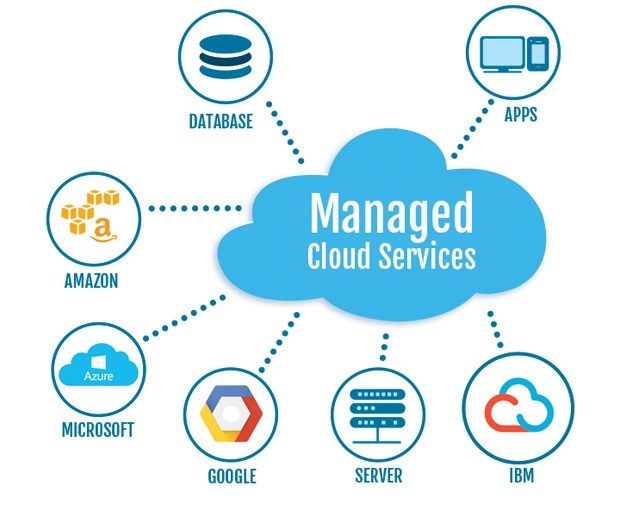
A comprehensive Cloud Managed Services Market Analysis requires a detailed segmentation of the industry to understand the diverse range of services offered and the specific needs of different customers. The market is typically broken down by the type of service, the size of the end-user organization, and the industry vertical. This granular approach provides crucial insights into which services are most in demand, how the value proposition differs for large enterprises versus smaller businesses, and which industries are most heavily reliant on third-party cloud management. By dissecting the market into these components, a clearer picture emerges of the specific pain points that MSPs are solving and the strategic role they play in the broader cloud ecosystem.
When analyzed by service type, the market is broadly divided into several key categories. Managed security services represent one of the largest and fastest-growing segments. This includes services like threat detection and response, identity and access management, and vulnerability management, addressing the top concern for most businesses in the cloud. Managed network services are another critical segment, covering the management of virtual private clouds (VPCs), load balancers, and connectivity to on-premise data centers. Managed infrastructure services, which involve the day-to-day management of virtual machines, storage, and databases, form the foundational layer of many CMS engagements. A newer, high-value segment is FinOps, or cloud financial management, which focuses exclusively on monitoring, forecasting, and optimizing a company's cloud spending.
An analysis by organization size reveals different adoption drivers and needs. Large enterprises are major consumers of cloud managed services, often engaging multiple MSPs for different workloads or to manage their multi-cloud environments. For them, the key drivers are often gaining access to specialized skills they can't hire in-house, ensuring robust governance and compliance across a complex organization, and optimizing their massive cloud spend. Small and medium-sized enterprises (SMEs) are a huge and rapidly growing segment of the market. For SMEs, which typically have small or non-existent IT teams, a Cloud MSP is often a complete lifeline. They rely on the MSP to be their entire cloud operations team, providing a full suite of services from initial setup to 24/7 support, allowing them to leverage the power of the cloud without the need for any in-house expertise.
Finally, an analysis by industry vertical highlights where cloud managed services are having the most significant impact. The Banking, Financial Services, and Insurance (BFSI) sector is a major adopter, relying on MSPs to help them navigate the strict security and compliance requirements of their industry while they modernize their applications. The healthcare industry is another key vertical, where MSPs with expertise in HIPAA compliance are in high demand to manage the secure hosting of sensitive patient data. The retail and e-commerce sector uses MSPs to manage the highly scalable infrastructure needed to handle fluctuating traffic during peak shopping seasons. The IT and telecommunications sector also heavily utilizes these services, both for their own operations and to bundle with their offerings to end customers, showcasing the broad applicability of the managed services model.
Explore More Like This in Our Regional Reports:

 English
 Arabic
 French
 Spanish
 Portuguese
 Deutsch
 Turkish
 Dutch
Dutch
 Italiano
 Russian
 Romaian
 Portuguese (Brazil)